
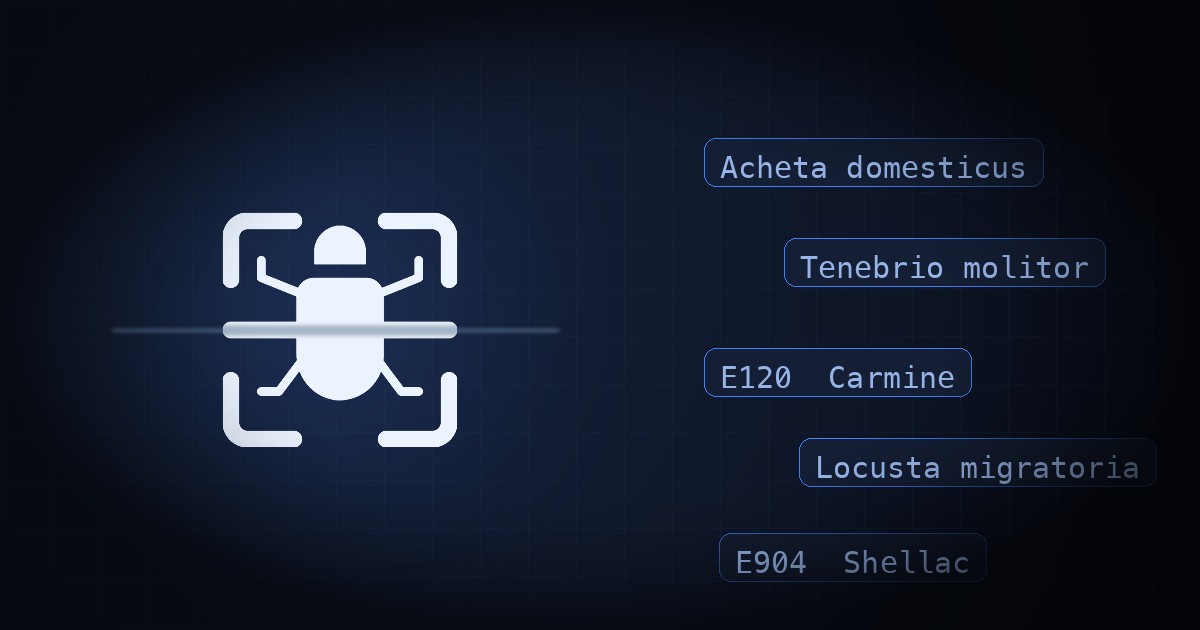
Which insects are approved in the EU?
In the EU, insects count as “novel foods” and need their own strict approval. Four species are currently authorised:
- Mealworm (Tenebrio molitor): the larva of the yellow mealworm, dried and as powder. Since February 2025 also a UV-treated powder with more vitamin D, for bread and rolls, cakes, pasta and cheese products, among others.
- House cricket (Acheta domesticus): frozen, dried, as powder and partially defatted powder.
- Migratory locust (Locusta migratoria): frozen, dried and as powder.
- Buffalo worm (Alphitobius diaperinus): the larva of the lesser mealworm beetle, frozen, as paste, dried and as powder.
Important: these ingredients may not be added secretly. The ingredient list must state the species with its scientific and common name, for example “Acheta domesticus (house cricket)”.
Hidden insects: the E numbers
Regardless of the new insect products, insects have long been in many foods as additives:
- E120 carmine / cochineal: a red colourant from the cochineal scale insect. Found in sweets, drinks, yoghurt or sausages.
- E904 shellac: a glaze from the secretion of the lac insect. Makes sweets and fruit shiny.
- E901 beeswax: glazing and release agent, produced by bees.
Why this can matter
It’s not about scaremongering but about transparency. For some groups the information is even health-relevant:
- Allergies: insect products can cause cross-reactions, especially for people allergic to crustaceans and molluscs (e.g. shrimp) or dust mites. Such products must carry a warning.
- Conscious diet: vegetarians and vegans usually want to avoid insects. Carmine and shellac are also of animal origin.
- Personal or religious reasons: many simply want to decide for themselves what ends up on their plate.
How do I spot insects on the packaging?
In theory it’s all in the ingredient list, in practice it’s easy to miss. Look out for:
- the scientific and common species names (e.g. Tenebrio molitor, house cricket)
- the E numbers E120, E904 and E901
- notes like “may contain traces of …”
The problem: the names are often in small print, in Latin and buried in a long list of ingredients.
The solution: Insect Scanner
That’s exactly what Insect Scanner is for. Instead of deciphering the fine print, you check a product in seconds:
- Scan the barcode: the product is instantly checked against a database of millions of foods.
- No barcode? Photograph the label: the AI reads the ingredient list and checks it directly.
- Clear traffic-light result: green means no insects, red means contains insects, yellow stands for substances you flagged.
- Your own watchlist: additionally monitor your own ingredients or E numbers.
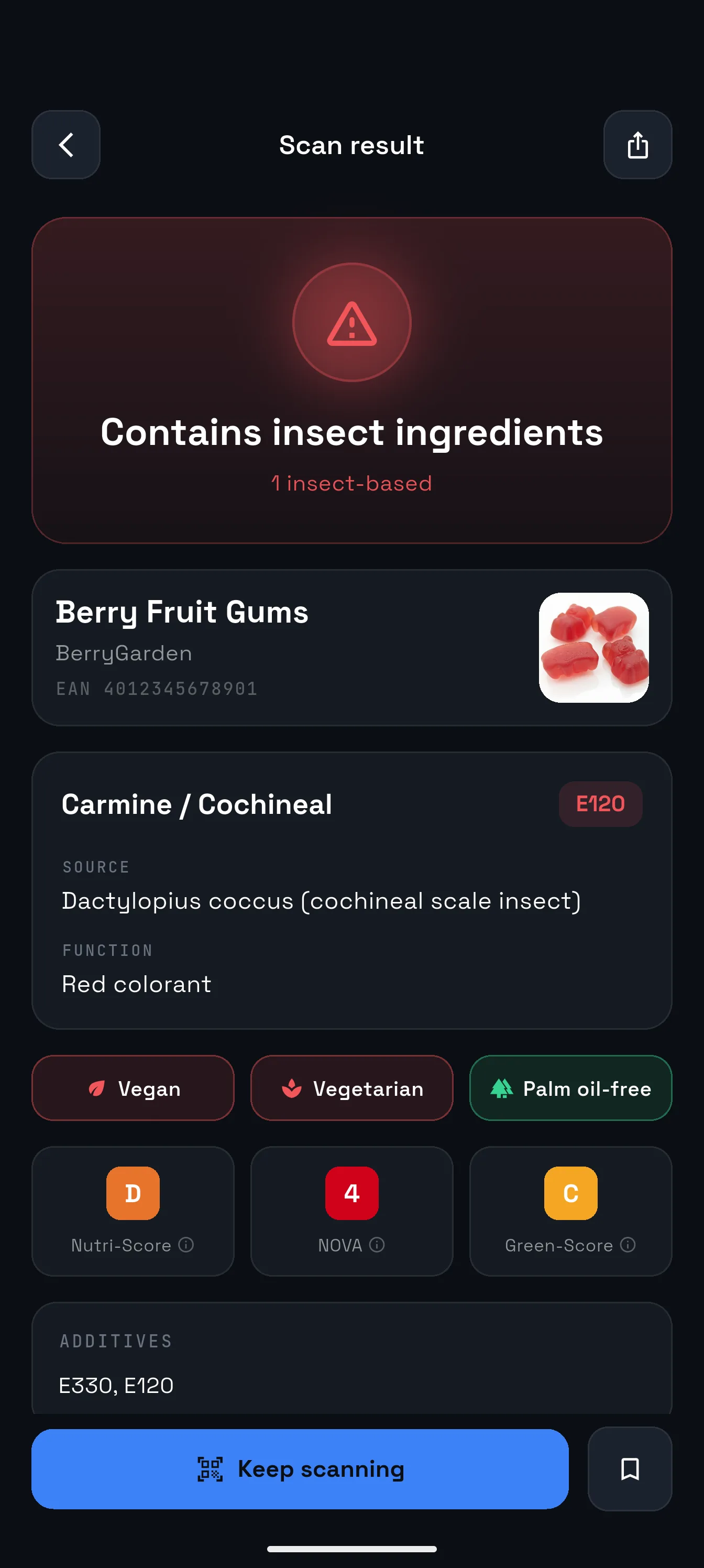 Clear result
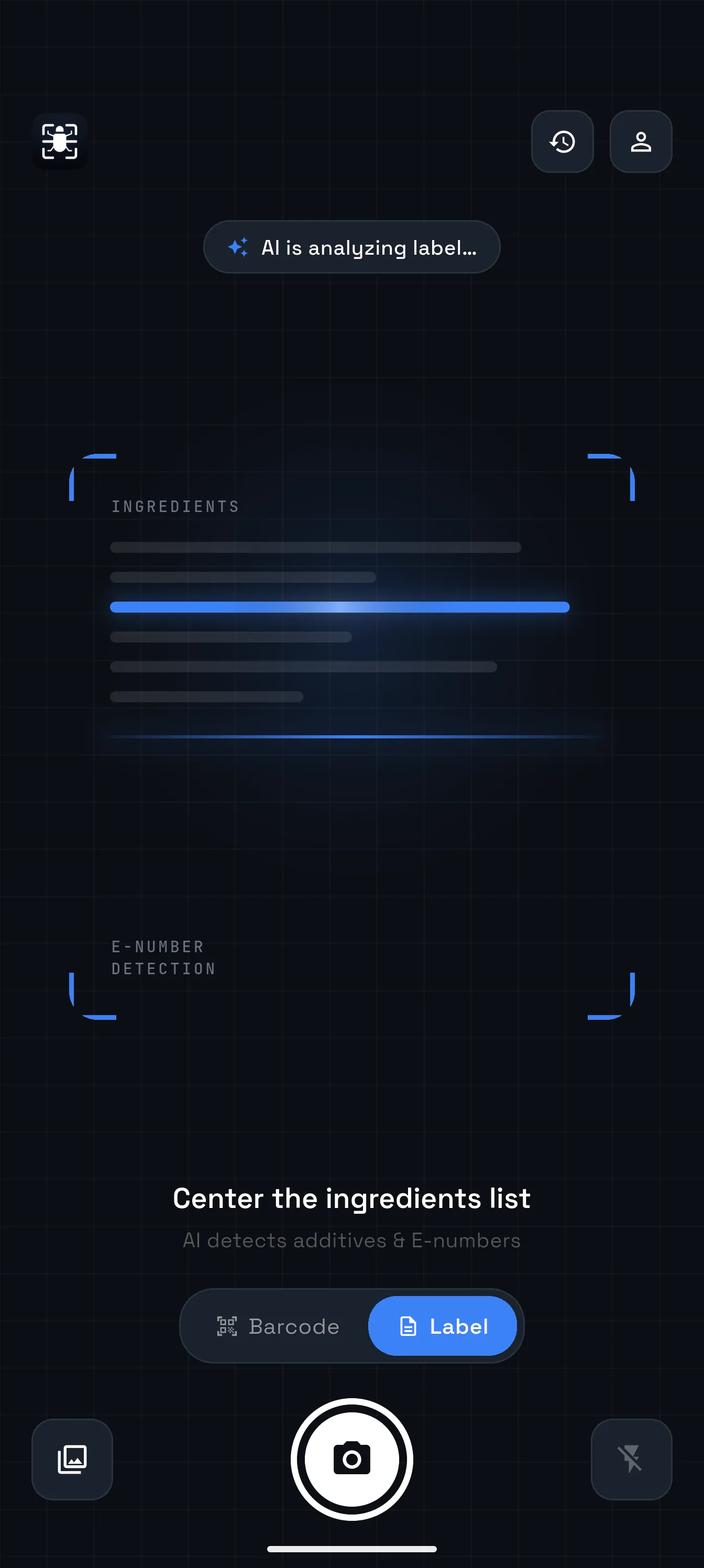 AI label scan
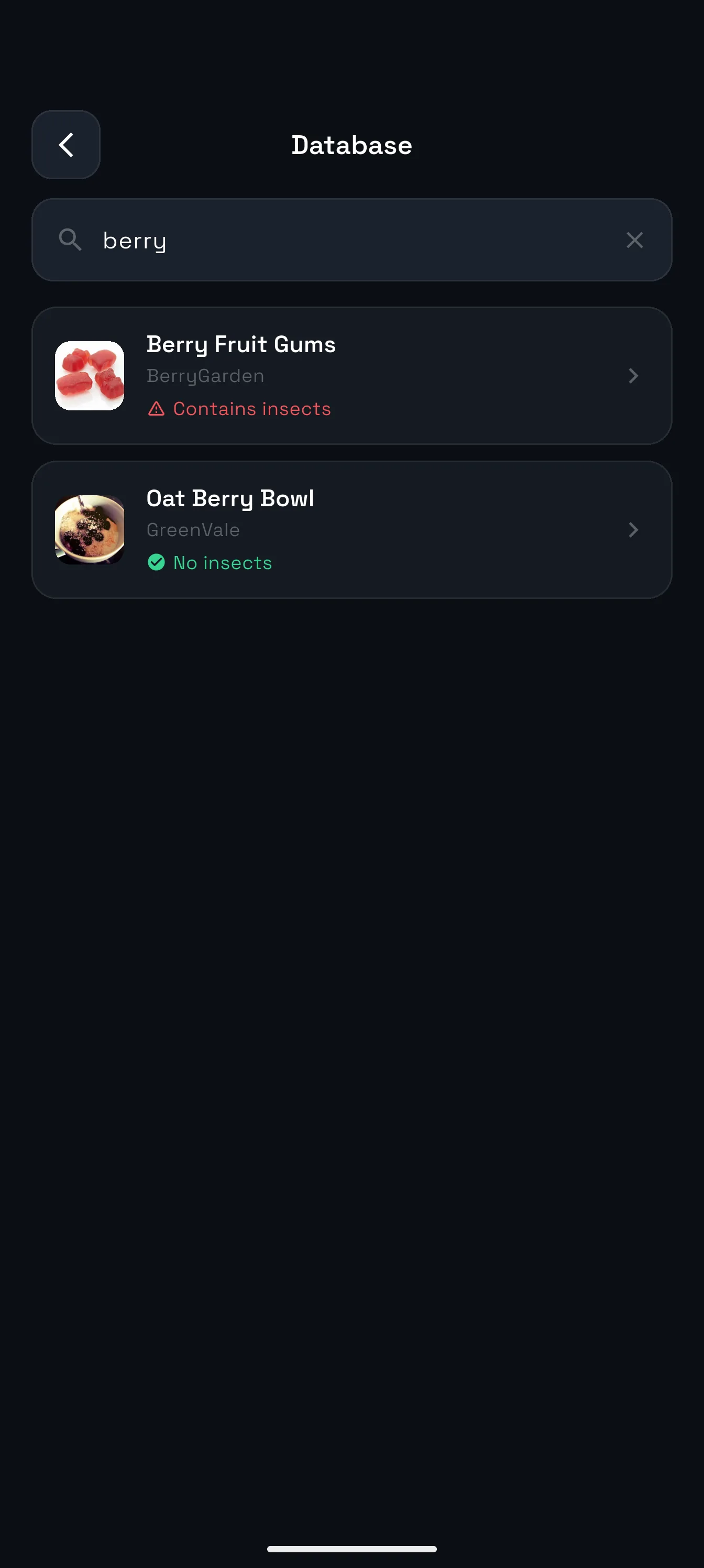 Database search
Note: This article is for information only and is not legal or nutritional advice. Approvals can change (as of June 2026).