
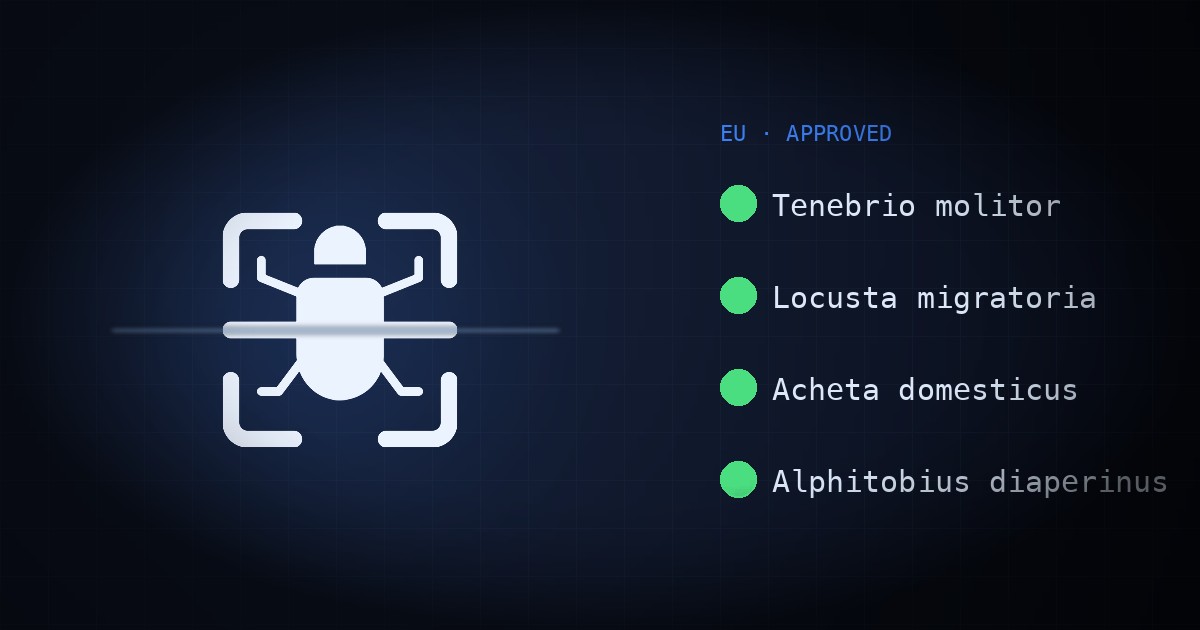
Currently approved species
In the EU, insects count as “novel foods” and each needs its own approval. As of June 2026, four species are authorised:
| Species | Approved form | Since |
|---|---|---|
| Mealworm (Tenebrio molitor) | dried; UV powder with more vitamin D | 2021 · UV powder Feb 2025 |
| Migratory locust (Locusta migratoria) | frozen, dried, powder | 2021 |
| House cricket (Acheta domesticus) | frozen, dried, powder, partially defatted powder | 2022 / 2023 |
| Buffalo worm (Alphitobius diaperinus) | frozen, paste, dried, powder | 2023 |
Where can they be used?
The approvals specify exactly which products and amounts an insect may be used in. The UV-treated mealworm powder, for example, is permitted in bread and rolls, cakes, pasta, cheese products and fruit compote, among others. Overall, insects appear mainly in processed products such as bars, snacks, baked goods or pasta.
Labelling and allergens
Insects may not be added secretly. The ingredient list must state the species with its scientific and common name, for example “Acheta domesticus (house cricket)”. In addition, an allergen note is mandatory: people allergic to crustaceans and molluscs or dust mites may react to insect products.
What’s still pending?
The list is not final. Further applications are under review at the European Food Safety Authority (EFSA), for additional species or new processing forms. So the list is likely to grow in the coming years. We keep this article updated accordingly.
Plus: the hidden classics
Regardless of the new insect products, insects have long been in many foods as additives: E120 carmine (red colourant from the cochineal scale insect), E904 shellac (shiny glaze from the lac insect) and E901 beeswax.
Always check, in seconds
You don’t need to memorise these names. Insect Scanner recognises both the approved species and the E numbers automatically, via barcode or AI label scan, and shows a clear traffic-light result.
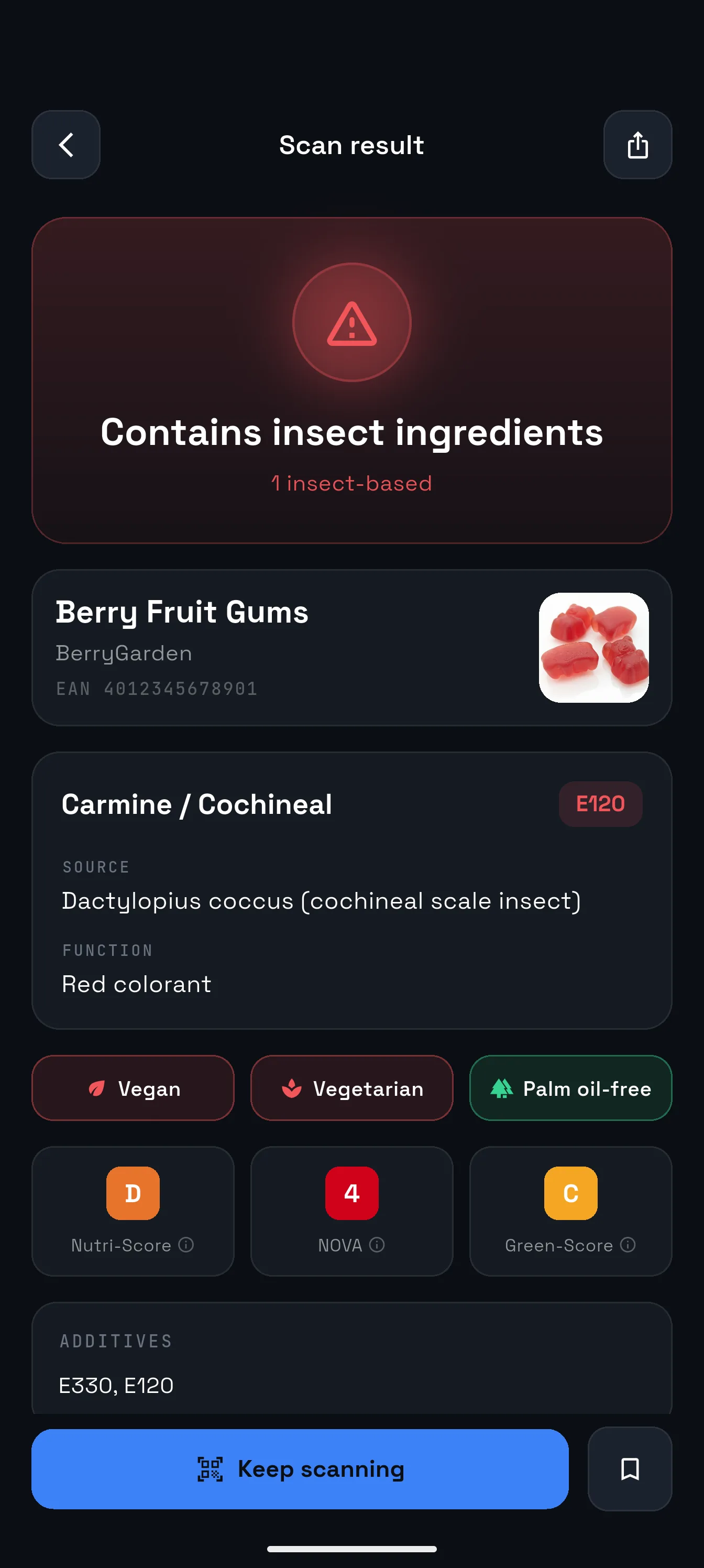 Clear result
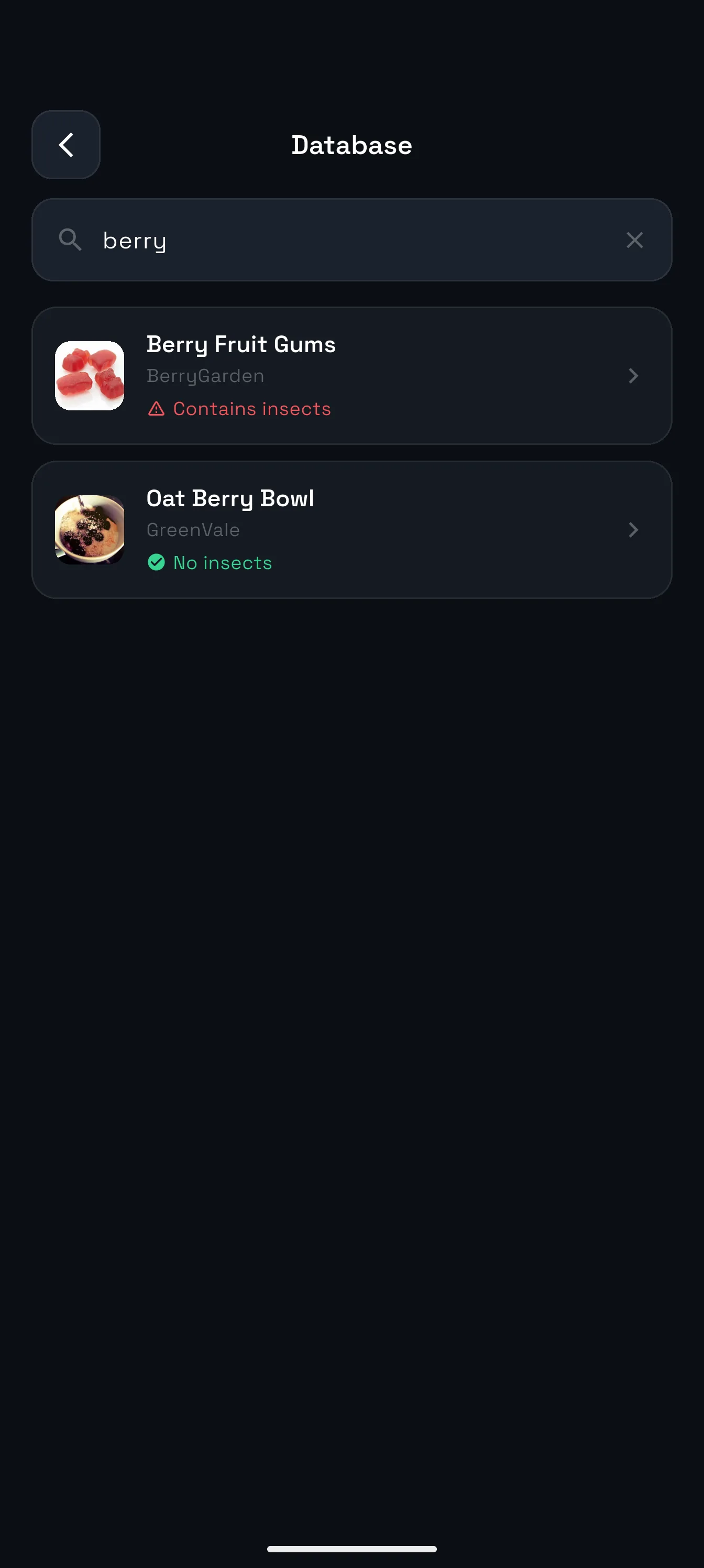 Database search
Note: This article is for information only and is not legal or nutritional advice. Approvals can change (as of June 2026).